

by Mat Dirjish
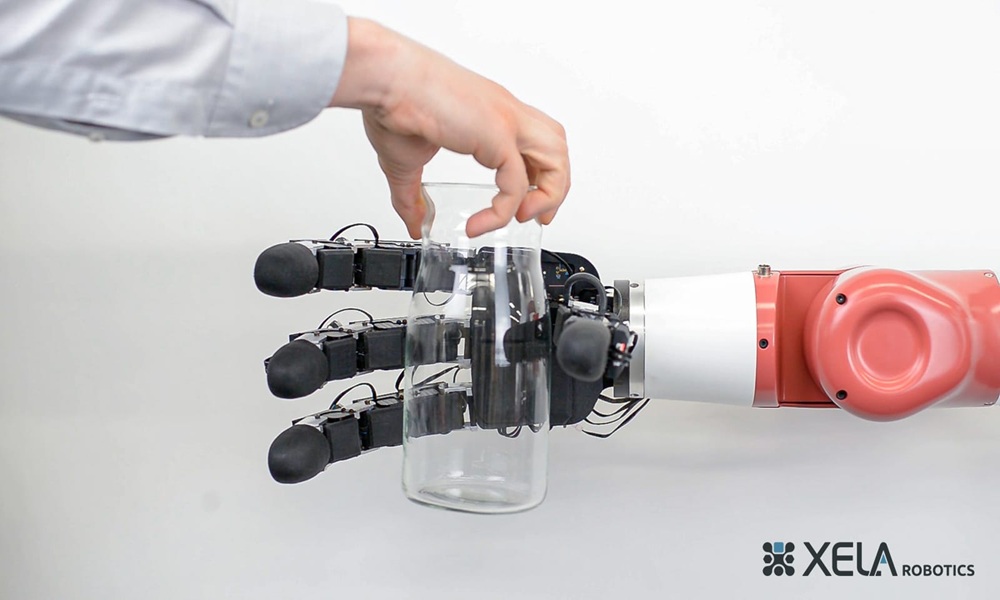
Developer of 3D tactile sensors XELA is set to unveil several new tactile sensor enhancements at Automate 2026, which it claims will provide robots with an unprecedented human sense of touch. The company’s hardware agnostic uSkin tactile sensor family adds a range of capabilities, which, as per XELA, makes them the most accurate and versatile on the market for robotic hands and grippers.
Six new enhancements include:
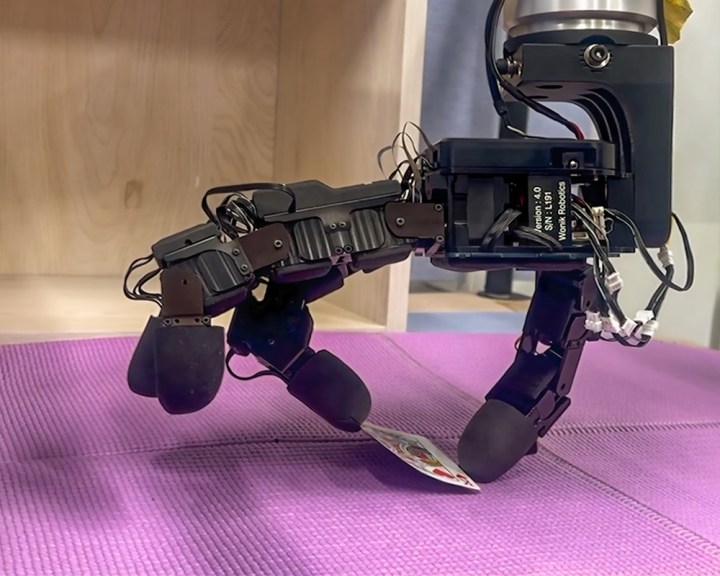
- Robotic fingertip with nail.
- uSkin integration within the Universal Manipulation Interface (UMI).
- Magnetic interference compensation.
- Enhanced delicate grasping capability.
- High durability models.
- Automatic weight and hardness detection.
Deemed an industry first, the robotic fingertip with nail is a robotic fingertip with a six-axis, force-sensitive nail. It also includes 30 tri-axial force sensing points distributed in the pulp. The robotic nail complements tactile sensors in the fingertip to enable the grasping of extremely thin objects including thin cards and keys and the conducting of actions as complex as scraping tape off a surface.
Integrating uSkin into the open-source UMI gripper enables AI for human-robot skill transfer by providing data collection from viewing humans doing everyday tasks and then transferring that skill to robot grippers. uSkin provides the ability to add distributed force-vector measurements to the data collection.
Magnetic interference compensation removes the most complex magnetic interference from nearby magnets or ferromagnetic materials. It goes beyond the prior add-on option which removed most magnetic interference other than for strong, small magnets nearly touching the sensors.
For delicate grasping capability, uSkin tactile sensors now have greater capability to grasp and manipulate fragile objects. This is the result of new software that includes machine vision to locate objects, provides better control of robot arms, and enables the use of a third-party graphic user interface.
For high-durability models, XELA updated the fingertip covers it provides. In case of damage, they can be easily replaceable without the need to swap out the sensors or fingertips themselves. The updated covers enable higher resilience and high-force sensing with lower sensitivity.
A final enhancement, automatic weight and hardness detection, robots employing uSkin tactile sensors can automatically determine the weight and hardness of objects they lift. For deeper details, visit the XELA Robotics website.
 Mat Dirjish Online